
All the sci-fi fans out there will have heard of the grandfather paradox… it goes something along these lines: if James were to travel back in time and accidentally shoot his grandfather before his parents were born, then could James, in fact, exist?
It’s an unanswerable question, and it sums up how many small business owners feel today. The business owner’s paradox is that they are expected to learn from the past and emulate role models, but they are also expected to look to the future while operating successfully in the now.
Hone your time travel superpowers – by developing your soft skills
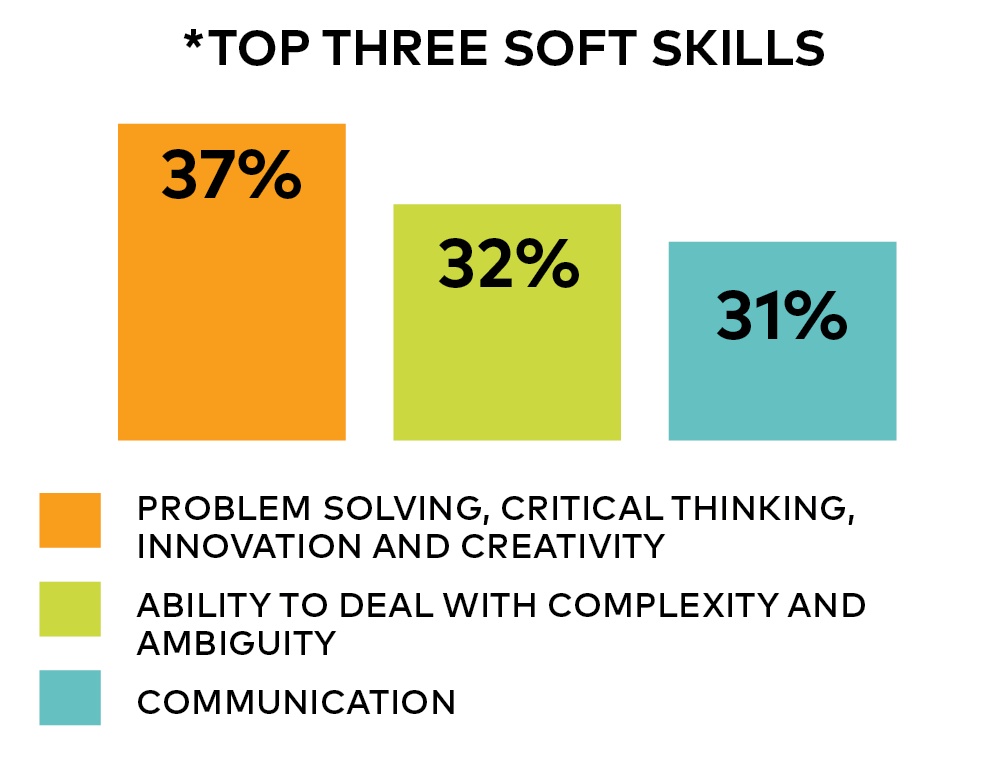
There’s nothing soft about soft skills. These are the non–technical, non–numerate, interpersonal skills that determine your approach to life, problems and people. The top three soft skills missing in the workplace today are: problem solving, ability to deal with complexity and ambiguity, and communication skills.
 |
Otherwise known as the ability to analyse a situation and make a judgment call to get over, under, or around business obstacles.
My friend and I were walking in the countryside. It had recently rained, and we got to a point in the path where the puddle was wider than we could jump.
I focused on crossing the puddle and looked for rocks to create stepping stones. My friend, however, focused on where we were heading. She realised that if we stepped off the path onto the grass, we could avoid the puddle altogether with a little detour.
We both came up with workable solutions, but I used purely what I had learnt in the past, whereas she looked to the future.
Hers was the simpler, quicker solution.
Sometimes problems don’t have straightforward solutions, but by focusing on where we want to be, we are able to look beyond the obstacle.
Innovation is only possible if we are looking ahead. It is a wonderful alchemy of past solutions with a new twist or technology.
Business leaders are bombarded with many variables and interdependent interests. These may be through operating in a globally connected world, highly regulated environments or fast developing events with insufficient information to make informed decisions. This complexity and ambiguity can be overwhelming, paralysing and highly stressful.
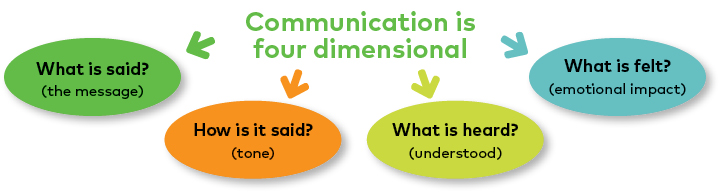
Communication goes beyond writing, talking, and listening. Great communicators recognise the emotional undercurrents.
Emotional intelligence is the ability to identify and manage one’s own emotions, as well as the emotions of others to communicate more effectively, manage conflict, and reduce stress.
 |
What’s your take on this? Share your comments and ideas.